
Most people get this wrong — not because they’re uninformed, but because the two treatments look similar from the outside.
Both are injectable. Both are non-surgical. Both are done in a clinic, often in under 30 minutes. But dermal fillers and Botox work completely differently — on different problems, through different mechanisms, with different results. Confusing the two is like using a hammer when you need a screwdriver. The tool matters.
If you’ve been wondering which one is right for your skin concerns, this guide breaks it down clearly — what each treatment actually does, which concerns each one addresses, what results look like, and what to ask when you walk into a skin clinic in Indiranagar for a consultation.
No jargon. No fluff. Just the information you actually need to make a good decision.
Understanding the Difference: Dermal Fillers vs Botox
Start here — because this is where most confusion begins.
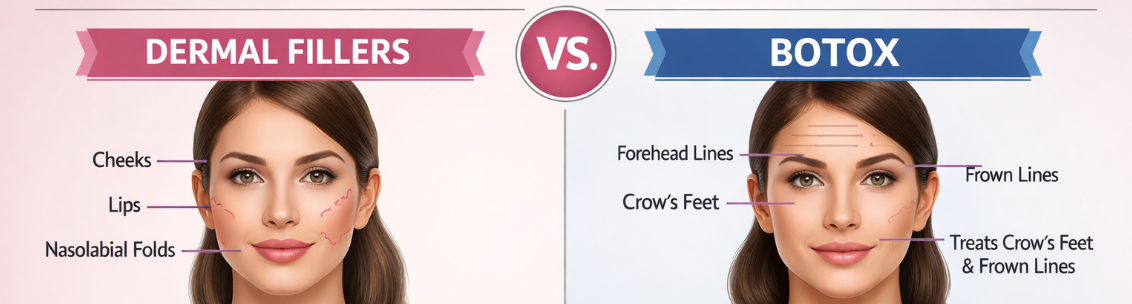
Botox is a purified form of botulinum toxin. It works by temporarily relaxing specific facial muscles — the ones responsible for creating expression lines. Forehead lines, frown lines between the brows, crow’s feet around the eyes. These form over years of repeated muscle movement. Botox tells those muscles to ease up. Lines soften. The face looks rested and refreshed.
Dermal fillers are a completely different category. Most use hyaluronic acid — a substance the skin naturally produces but loses with age. Fillers add volume back where it’s been lost. They fill hollows, restore structure, plump deflated areas. Sunken cheeks. Under-eye troughs. Lips that have lost their definition. Folds caused by volume loss rather than muscle movement.
One relaxes muscles. One restores volume. Simple — but the distinction is everything when deciding which one you need.
How Dermal Fillers Work to Restore Youthful Volume
Ageing isn’t just about wrinkles. That’s the part most people don’t fully appreciate until they see the changes in their own face.
With age, the face loses fat pads, bone density shifts, and collagen production slows. The result isn’t just lines — it’s a loss of three-dimensional structure. Cheeks flatten. The area under the eyes looks hollow. The jawline softens and loses definition. The face starts looking tired, even when you’re not.
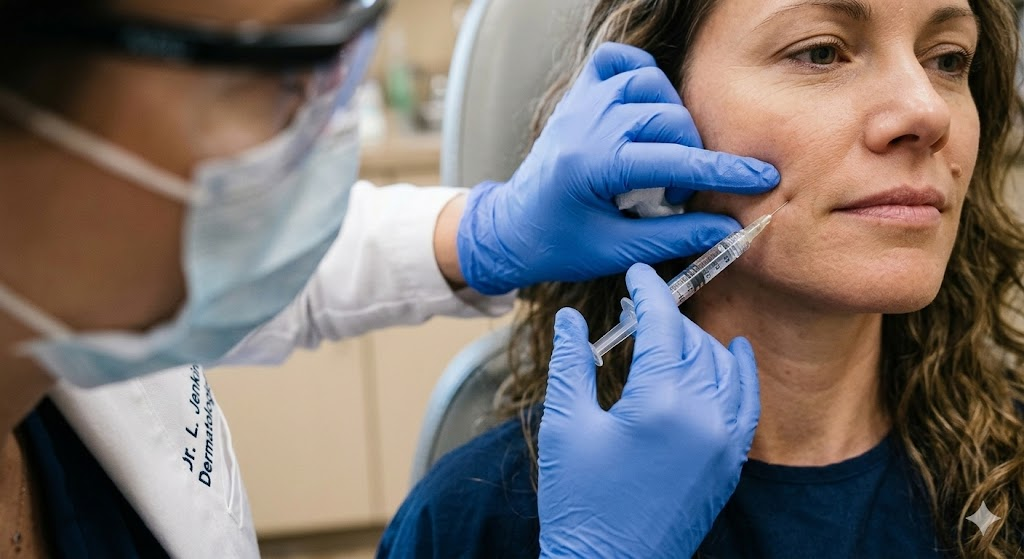
Hyaluronic acid-based dermal fillers in Indiranagar address exactly this. Injected with precision into targeted areas, they lift, define, and restore volume — not change the face, but bring it back to what it looked like before the loss happened. Cheek augmentation, under-eye hollows, lip enhancement, nasolabial folds caused by volume loss, jawline definition — fillers work well for all of these when placed by an experienced dermatologist.
Results are immediate. The change is visible the same day — though some mild swelling for 24 to 48 hours is normal before the final result settles in.
When done well, the result should look like you — just more rested. Not altered. Not overdone. That’s the standard a good dermatologist holds.
Botox: How It Smooths Wrinkles and Fine Lines
Botox has been used clinically for decades — and it’s one of the most extensively studied cosmetic treatments available. The myths around it, though, are still alive and well.
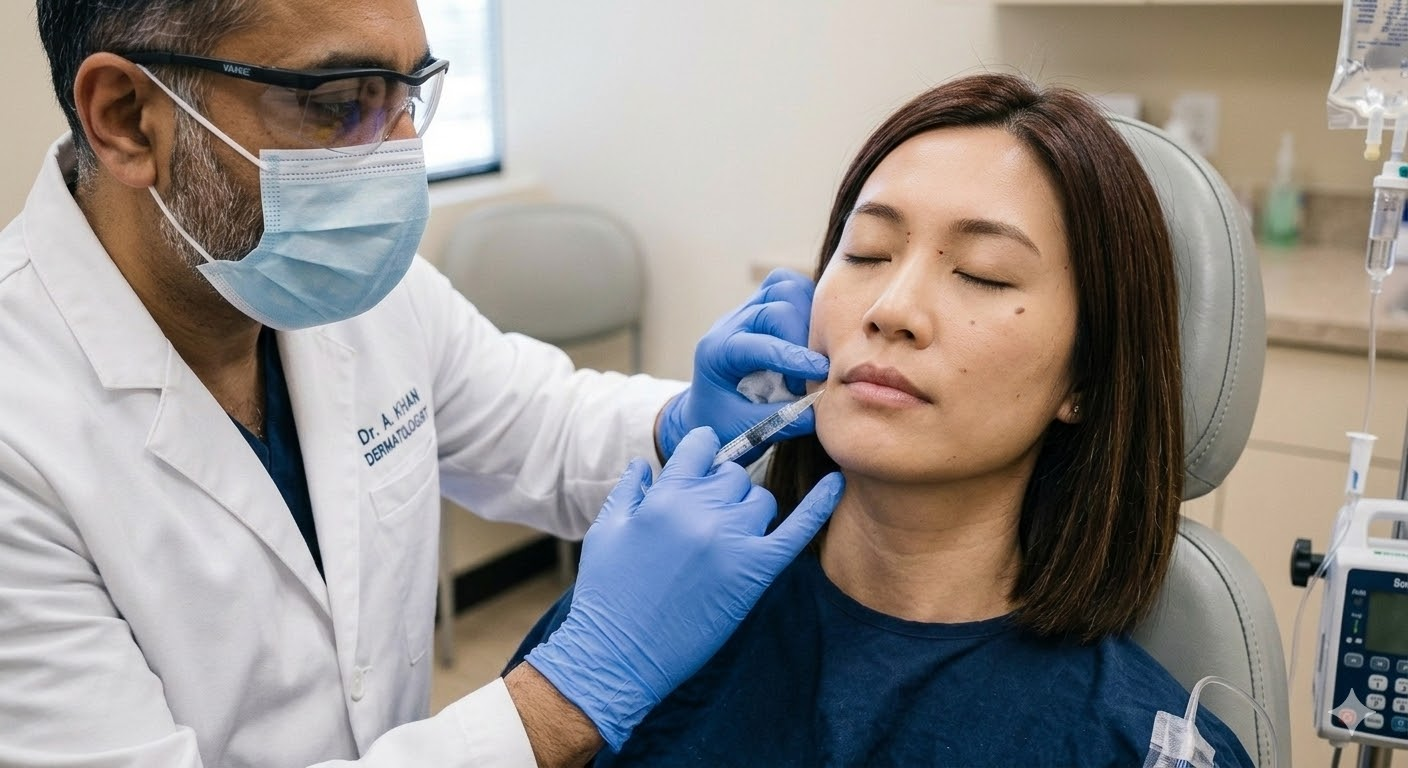
No, it doesn’t freeze your face. No, you won’t look expressionless. What botox treatment in Indiranagar — done correctly — actually does is relax overactive facial muscles just enough that the lines they create stop deepening. Expressions remain. Movement remains. The face just doesn’t work quite as hard in the areas where repeated movement has caused lines to form.
The concerns Botox addresses most effectively:
- Horizontal forehead lines — from raising the eyebrows
- Glabellar lines — the vertical ’11’ lines between the brows from frowning
- Crow’s feet — fine lines at the outer corners of the eyes
- Bunny lines — lines on the nose from scrunching
- Lip lines — fine vertical lines above the upper lip
- Masseter reduction — jaw slimming by relaxing the chewing muscle
- Neck bands — softening platysmal bands that become more visible with age
Results typically appear within 3 to 7 days and last around 3 to 4 months for first-time patients — often longer with regular maintenance, as the treated muscles gradually weaken with repeated relaxation over time.
Which Treatment Targets Your Specific Concerns?
The easiest way to think about it — look at what’s actually causing the thing you want to fix.
Lines that appear when you move your face — smiling, frowning, squinting — are caused by muscle movement. Botox. Lines and hollows that are present even when your face is completely relaxed — flat cheeks, sunken under-eyes, lost lip volume — are caused by volume loss. Fillers. Both? Then a combination approach, which is actually what most patients over 35 benefit from.
| Your Concern | Root Cause | Right Treatment |
|---|---|---|
| Forehead lines, frown lines, crow's feet | Repeated muscle movement | Botox |
| Flat cheeks, hollow midface | Fat pad and volume loss | Dermal Fillers |
| Thin lips, lost lip definition | Volume loss in lip tissue | Dermal Fillers |
| Under-eye hollows (tear trough) | Volume loss beneath the eye | Dermal Fillers |
| Nasolabial folds (smile lines) | Volume loss + skin descent | Dermal Fillers |
| Vertical lip lines | Muscle movement + skin thinning | Botox (+ fillers sometimes) |
| Square jaw, teeth grinding | Overactive masseter muscle | Botox |
| Neck bands | Platysma muscle prominence | Botox |
| Combined facial ageing | Both volume loss + muscle movement | Botox + Fillers together |
One important note — most patients dealing with overall facial ageing benefit from both treatments used together. Botox for the upper face where muscle movement dominates. Fillers for the mid and lower face where volume loss is the main issue. A qualified dermatologist at a skin clinic in Indiranagar will assess your face and recommend the right combination rather than pushing one treatment for everything.
Still unsure which treatment your face needs?
Book a consultation at Dr. Swetha’s Cosmoderm Centre — skin clinic in Indiranagar. Get an honest face assessment with zero pressure or upselling.
The Results You Can Expect from Dermal Fillers
Volume is restored the same day. Hollows are softened. Cheeks lift. Lips have more definition. The change is visible when you leave the clinic — though mild swelling is normal for the first 24 to 48 hours and will settle to reveal the final, natural-looking result.
How long results last depends on the product used, the area treated, and individual metabolism:
- Lip fillers: 6 to 9 months — lips move a lot, so product breaks down faster
- Cheeks and midface: 12 to 18 months — denser products in less mobile areas last longer
- Under-eye fillers: 9 to 12 months — a delicate area requiring precise placement
- Jawline fillers: 12 to 18 months with the right product
One thing worth knowing: hyaluronic acid fillers are fully reversible. If a result is ever uneven or unsatisfactory, an enzyme injection can dissolve the filler completely. That reversibility is a meaningful safety net — and one reason most qualified dermatologists prefer HA-based products over permanent fillers, particularly for first-time patients.
What to Expect After Botox Treatment
The session itself is quick — 15 to 20 minutes in most cases. Tiny needles. Minimal discomfort. No anaesthesia needed for most areas.
What happens in the days after — the honest version. Nothing visible for the first 2 to 3 days. Botox takes 3 to 7 days to fully activate, and 10 to 14 days to show the complete result. Patients who expect to see something immediately sometimes worry it hasn’t worked. It has — it just takes time to settle.
A few aftercare rules that matter:
- No gym, heavy exercise, or bending forward for 4 hours post-treatment — increased blood flow can affect product distribution
- No massaging or rubbing the treated areas for 24 hours
- No lying flat for 4 hours after the session
- Avoid excessive heat — saunas, steam rooms — for 24 hours
Side effects at a reputable clinic are minor: slight redness at injection sites that resolves within hours, occasionally mild bruising. Results last 3 to 4 months initially — with regular maintenance, many patients find the duration extends as treated muscles gradually weaken from repeated relaxation.
Which One Should You Choose Based on Your Needs?

The honest answer — there isn’t one universal right choice. It depends entirely on what your face is doing.
Dynamic lines caused by facial movement? Botox. Volume loss, hollowing, structural deflation? Dermal fillers. Both? A planned combination — which is more common than most people realise after the mid-30s — delivers the most complete and natural-looking result.
What to avoid: choosing based on what’s trending, what a friend got, or what a clinic is currently promoting. Both treatments work. Both are safe. The question that actually matters is what does your specific face need right now — and that question is best answered in person, with a proper face assessment at a qualified skin clinic in Indiranagar, not based on social media recommendations.
A good dermatologist will always explain before they treat — walk you through exactly what they’re recommending, why, what results to expect, and what happens if you decide you want to reverse or adjust anything later.
Safety, Side Effects, and Choosing the Right Clinic
Both Botox and dermal fillers are safe — when performed by a qualified medical professional using genuine, approved products.
That second part matters more than most people realise.
The aesthetic treatment market in India has grown rapidly. With that growth comes providers who aren’t qualified, products that aren’t genuine, and clinics that prioritise volume of patients over patient safety. Complications from incorrectly placed fillers — vascular occlusion, migration, asymmetry — are rare in experienced hands. They’re not rare in inexperienced ones. Always verify that your provider is a licensed dermatologist or plastic surgeon, not a beautician or aesthetician with a weekend training certificate.
Common side effects at a reputable clinic are mild and temporary:
- Slight redness or small bumps at Botox injection sites — resolve within an hour
- Mild bruising after either treatment — usually gone within 3 to 5 days
- Swelling after fillers — normal for 24 to 48 hours, settles to final result
- Tenderness at injection sites — mild and short-lived
Serious complications are rare when treatment is done correctly. The most significant risk with fillers — vascular occlusion from product accidentally entering a blood vessel — requires immediate medical attention and is why knowing facial anatomy is non-negotiable for anyone performing filler injections. This is clinical medicine, not beauty therapy.
When choosing a skin clinic in Indiranagar for either treatment, look for a qualified dermatologist, transparency about the products being used, a proper consultation before any treatment, and a clinic that will see you for a follow-up if needed.
Ready to find out which treatment is right for your face?
Visit Dr. Swetha’s Cosmoderm Centre — trusted skin clinic in Indiranagar. Proper face
Frequently asked question.
Does Botox hurt?
Barely. The needles used are extremely fine, and sessions take 15–20 minutes. Numbing cream is available for sensitive areas — most patients find it far less uncomfortable than they expected.
Can Botox and fillers be done at the same time?
Yes — and combining them often gives the most balanced, natural result. A qualified dermatologist will plan both together so they complement rather than compete with each other.
How long do fillers last compared to Botox?
Fillers last 6–18 months depending on the area. Botox lasts 3–4 months initially, often extending with regular maintenance. Both timelines vary by individual.
Will the results look unnatural or overdone?
Not with the right amount and the right doctor. The goal is always restoration — bringing the face back to its natural balance, not altering it. Subtle, well-placed treatment should look like you, just more rested.
Is there any downtime after these treatments?
Minimal. Botox has virtually no downtime — most return to normal activity immediately. Fillers cause mild swelling for a day or two, nothing that significantly disrupts daily life.