
Hair loss is personal. Really personal.
It’s not just about the hair. It’s the confidence that goes with it. The way you style differently to cover a spot. The photos you avoid. The mirror you stop checking. By the time most patients walk into our skin clinic in Indiranagar asking about PRP therapy, they’ve already spent months — sometimes years — trying things. Shampoos that promised regrowth. Oils passed down by relatives. Supplements from YouTube recommendations. Some of it slowed the loss a little. Most of it didn’t.
PRP therapy for hair loss is different. Not because it’s new or trendy — it’s actually been used in medicine for decades. But because when it works, it works from the inside out. Not coating the hair shaft. Actually waking up follicles that have gone quiet.
Does it work for everyone? Honestly, no. Is it worth considering? For the right candidate — absolutely yes. Let me explain exactly what it is, what realistic results look like, and how we approach PRP therapy for hair loss at our clinic.
What is PRP Therapy for Hair Loss?
PRP stands for Platelet-Rich Plasma. And before your eyes glaze over at the medical terminology — stay with me, because this one is actually worth understanding.
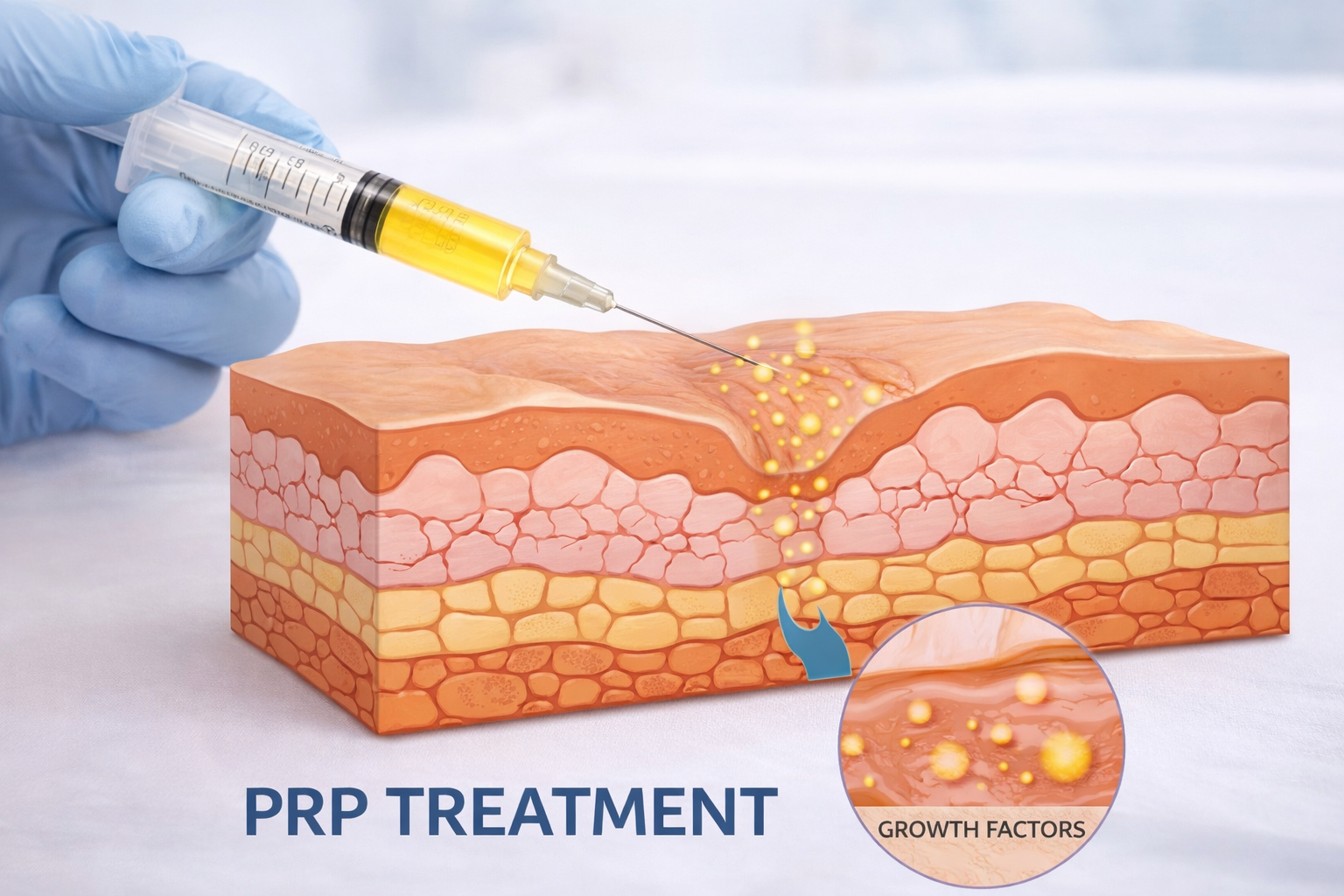
Your blood contains platelets. Tiny cells loaded with growth factors — proteins that your body uses to repair tissue, heal wounds, and stimulate new cell growth. PRP therapy takes that natural repair mechanism and concentrates it, then delivers it precisely where it’s needed most.
For hair loss, that means your scalp. Specifically, the follicles that have shrunk or gone dormant due to DHT sensitivity, stress, hormonal imbalance, or poor scalp circulation — the most common culprits behind androgenetic alopecia (pattern hair loss) in both men and women.
No synthetic drugs. No foreign chemicals introduced. Just your own biology, concentrated and redirected.
How PRP Therapy Works for Hair Restoration
The process starts with a blood draw — a small amount, similar to what you’d give for a routine blood test.
That blood goes into a centrifuge. It spins at high speed and separates into layers — red blood cells at the bottom, platelet-rich plasma at the top. We extract that plasma. It now contains a concentration of platelets 5 to 10 times higher than what’s naturally circulating in your blood.
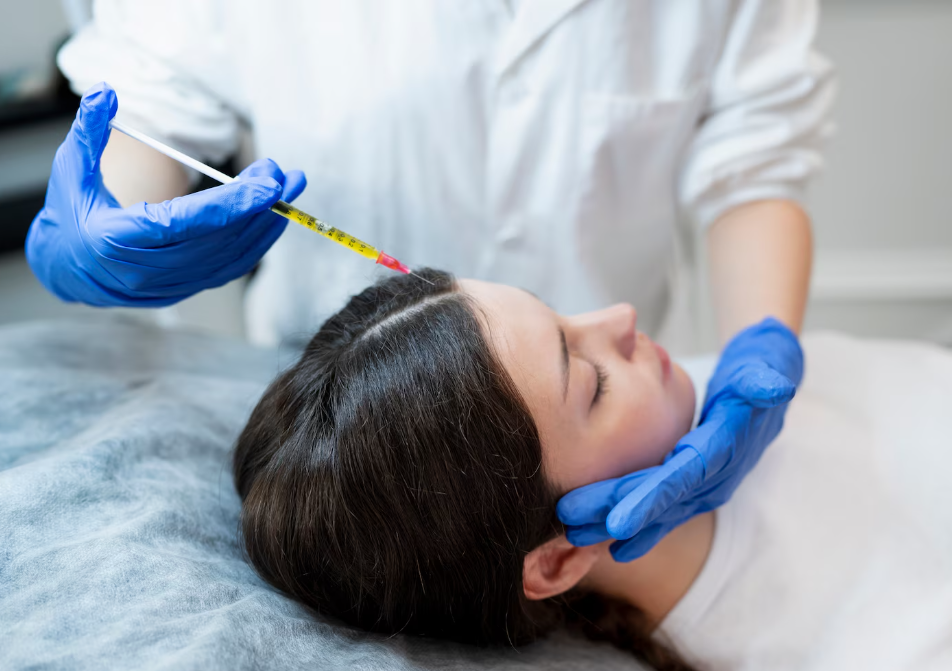
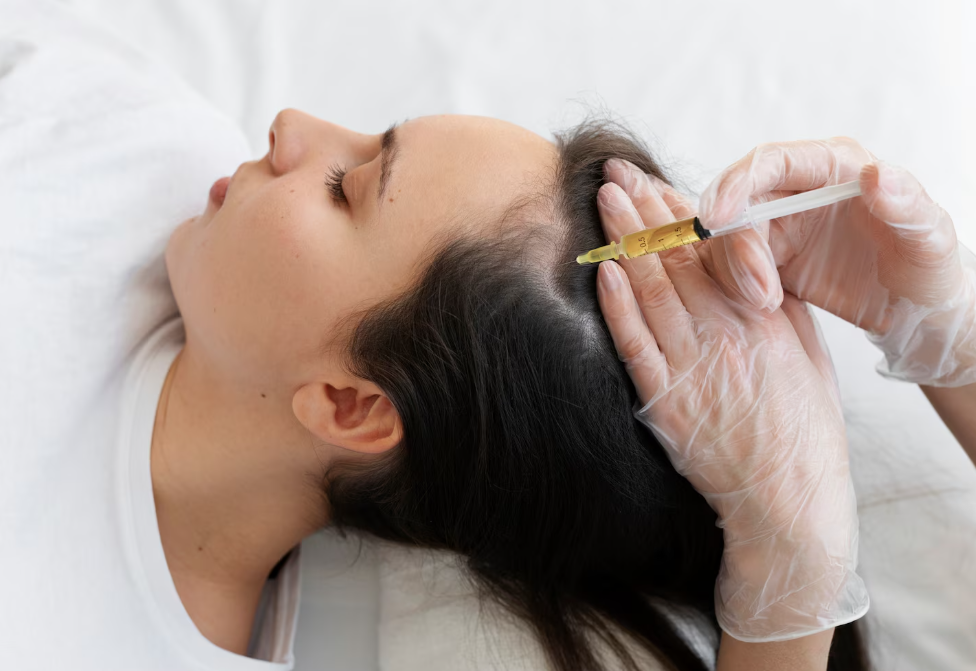
That concentrated plasma is then injected into the scalp — specifically into areas where hair has thinned or follicles appear to be weakening. The growth factors in the plasma get to work immediately: stimulating dormant follicles, improving blood supply to the scalp, reducing inflammation, and extending the active growth phase of existing hair.
It’s not growing new follicles from scratch. It’s reviving the ones that are already there but underperforming. That distinction matters — and it’s why early intervention gives better results than waiting until hair loss is advanced.
Results of PRP Therapy: What Can You Expect?
Let me be honest here — because I think patients deserve that more than they deserve a sales pitch.
PRP therapy is not a miracle. Results vary depending on the cause of your hair loss, its severity, your age, and your overall health. What I can tell you is what I consistently see in patients at our clinic:
- Reduced hair fall — usually the first thing patients notice, often within 4–6 weeks of the first session.
- Improved hair thickness — existing hair grows back denser and stronger. This is often more noticeable than new growth initially.
- New hair growth — in areas of thinning where follicles are still active, new fine hairs typically appear between session 2 and session 4.
- Improved scalp health — better circulation, less itching, less dryness. Patients often mention this as an unexpected bonus.
What PRP won’t do: it won’t restore a completely bald scalp. It won’t work as a substitute for treating an underlying hormonal or nutritional deficiency. And it won’t hold results if the root cause of the hair loss isn’t addressed alongside the treatment.
Most patients need 3 to 4 sessions spaced 4 weeks apart for an initial course. Maintenance sessions every 4 to 6 months help sustain the results long-term.
PRP Therapy Cost: Is It Worth the Investment? — Skin Clinic in Indiranagar
This is the question everyone asks — and I appreciate that it’s a fair one.
At our skin clinic in Indiranagar, PRP therapy is priced to be accessible without cutting corners on equipment or protocol. The cost per session varies based on the area being treated, the severity of hair loss, and the number of sessions recommended for your specific situation. We discuss this transparently at the first consultation — no surprise charges, no pressure to commit to packages upfront.
Is it worth it? That depends on what you’re comparing it to.
Consider what most patients have already spent on shampoos, supplements, and oils that didn’t deliver real results. PRP, when the right candidate goes through a proper course with maintenance, offers lasting, meaningful improvement — not a temporary cosmetic fix. For patients dealing with early to moderate hair loss, the return on that investment is real.
Benefits of PRP Therapy for Hair Loss
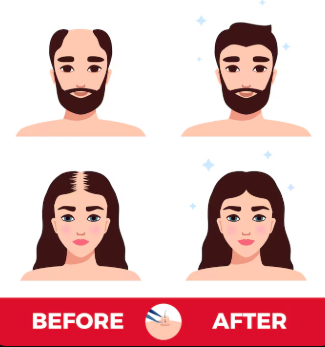
Beyond the regrowth itself — a few things about PRP that patients consistently appreciate after going through it:
- It uses your own blood — no risk of allergic reaction, no foreign substances introduced into your body.
- Minimal downtime — most patients resume normal activity the same day. Some mild scalp tenderness for 24 hours, that’s usually it.
- No systemic side effects — unlike some oral hair loss medications, PRP doesn’t affect hormones, libido, or other body systems.
- Works for both men and women — pattern hair loss, stress-related shedding, postpartum hair loss — PRP addresses all of these.
- Complements other treatments — PRP pairs well with mesotherapy, hair analysis-based supplement protocols, and topical treatments for enhanced results.
What to Expect During the PRP Treatment Process
Patients are often surprised by how straightforward the session actually is.
You come in, a small amount of blood is drawn from your arm. While the centrifuge processes it — takes about 10 minutes — we apply a topical numbing cream to the scalp. By the time the PRP is ready, the scalp is comfortable and the injections are well-tolerated by most patients.
The injections themselves cover the thinning areas systematically. The whole session — blood draw to finish — takes about 45 minutes to an hour. You leave with a slightly tender scalp, no visible signs of treatment, and instructions for the next 24 hours.
- Avoid washing your hair for 24 hours post-session.
- No intense exercise or heat exposure for 48 hours.
- Avoid blood thinners like aspirin or alcohol for a few days before and after, as advised.
That’s genuinely it. Most people find it far less intimidating than they expected.
PRP Therapy vs. Other Hair Loss Treatments
Where does PRP sit compared to everything else available? Here’s an honest breakdown:
| Treatment | How It Works | Best For | Downtime |
|---|---|---|---|
| PRP Therapy | Activates follicles using your own growth factors | Early to moderate hair loss, thinning | Minimal — same day return |
| Mesotherapy | Nutrient cocktail injected into scalp | Nutritional deficiency-related loss | Minimal |
| Minoxidil (topical) | Increases blood flow to follicles | Mild hair loss, maintenance | None — daily application |
| Finasteride (oral) | Blocks DHT hormone | Male pattern baldness | None — daily pill, side effect risk |
| Hair Transplant | Surgical follicle relocation | Advanced baldness, permanent solution | 1–2 weeks recovery |
PRP sits in a meaningful middle ground — more targeted than topical treatments, less invasive than surgery, and without the systemic side effects of oral medications. For many patients dealing with early to moderate hair loss, it’s the most sensible first clinical step.
Is PRP Therapy Right for You? — Visit Our Skin Clinic in Indiranagar
Good candidates for PRP are patients who:
- Are in the early to moderate stages of hair loss — not complete baldness
- Have hair follicles that are weakened but still present
- Are dealing with pattern hair loss, stress-related shedding, or postpartum hair thinning
- Are in reasonable overall health with no active blood disorders or infections
PRP is generally not the right fit for patients with advanced baldness, active scalp infections, or certain blood conditions. That’s why a proper consultation and hair analysis comes first — always.
At Dr. Swetha’s Cosmoderm Centre we don’t recommend PRP to every patient who asks for it. We recommend it when it’s the right fit. And when it is, the results speak for themselves.
Thinking about PRP therapy for hair loss?
Come in for a consultation first. Dr. Swetha will assess your scalp, diagnose the cause, and tell you honestly whether PRP is the right step for you.
Frequently asked question.
Is PRP therapy painful?
Not really — we apply numbing cream before the injections. Most patients describe it as mild pressure, nothing more. The anticipation is usually worse than the actual session.
How soon will I see results from PRP therapy?
Reduced hair fall often shows within 4–6 weeks. Visible thickness and new growth typically appear between session 2 and 4. Patience matters here — hair growth is slow by nature.
How many PRP sessions do I need?
Most patients start with 3–4 sessions spaced a month apart, then maintenance every 4–6 months. We give you a personalised plan at the first consultation — not a fixed package.
Can women get PRP therapy for hair loss?
Absolutely — PRP works well for female pattern hair loss, postpartum shedding, and stress-related thinning. It’s one of the most effective non-hormonal options available for women.
Is PRP better than minoxidil or finasteride?
Different tools for different situations. PRP has no systemic side effects and works from within. For many patients, combining PRP with topical treatment gives the best long-term outcome — we’ll advise based on your specific case.