
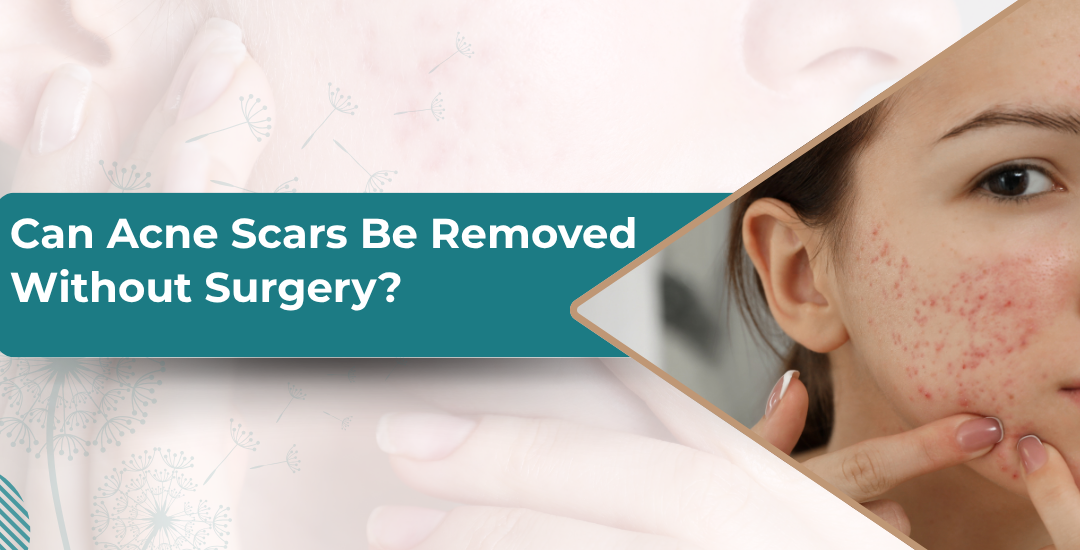
Acne scars can be reduced significantly without surgery. Non-surgical options like fractional laser resurfacing, microneedling, chemical peels and dermal fillers break down old scar tissue and push the skin to build fresh collagen. What works depends on the scar type, whether it’s a shallow rolling dip, a sharp boxcar crater, a narrow icepick pit or leftover pigment. Deeper scars need several sessions. And flat brown or red marks often clear with topical retinoids alone.
According to Dr. Swetha, a leading dermatologist in Indiranagar, “Scar removal isn’t one procedure; it’s reading the skin first and then layering the right treatments so collagen rebuilds from underneath.”
How Do Non-Surgical Treatments Fade Acne Scars?
Every method works by either removing damaged skin or forcing the body to rebuild collagen
- Lasers: Fractional beams punch microscopic channels into scarred skin so new collagen slowly fills the sunken areas over a few weeks.
- Microneedling: Tiny needles create a controlled injury that basically tricks your skin into repairing itself and softening those rolling dips.
- Peels: Acid solutions dissolve the damaged top layer, and pigment marks lighten as newer, more even skin surfaces underneath.
- Fillers: Injectable gels lift depressed scars almost instantly, though that plump effect isn’t permanent and needs topping up later on.
Honestly, pairing two of these usually beats leaning on a single one. See our chemical peel treatment.
Which Acne Scars Respond Best To Treatment?
Scar shape and depth decide how quickly the skin clears.
- Rolling: These shallow, wavy depressions respond fast to microneedling because there’s still healthy tissue sitting underneath to rebuild.
- Boxcar: Sharp-edged craters need laser resurfacing, and the deeper ones can take four or five sittings before they smooth out.
- Icepick: Narrow deep pits are stubborn. They often need a small punch technique first before any surface treatment even starts helping.
- Pigment: Brown or red spots aren’t real scars at all, and they usually fade with topicals plus strict daily sun protection.
Get the scar type wrong and you’ll waste months chasing the wrong fix. More on this in our guide to treating pigmentation after acne.
Not sure if your scars will fade on their own?
Why Choose Dr. Swetha P?
Dr. Swetha P is a qualified dermatologist and cosmetologist with extensive hands-on experience in acne scar revision and skin resurfacing. Every scar treatment is carefully planned around the individual patient’s unique skin needs.
Each patient receives a fully personalised approach scars are assessed in detail, treatments are layered in the right sequence, and progress is monitored closely after every session. Effective acne scar treatment takes time, and we believe that patience is what delivers real, lasting results.
Frequently asked question.
Can acne scars be removed completely?
Most scars fade by 60 to 90 percent, though total erasure isn’t always realistic.
How many sessions do acne scars need?
Usually three to six sittings spaced a few weeks apart, depending on depth.
Is microneedling safe for all skin types?
Yes, it’s generally safe across skin tones when done by a trained dermatologist.
Do acne scars come back after treatment?
Treated scars don’t return, but new breakouts can create fresh ones.
Refrences
Disclaimer: This content is for informational purposes only and does not substitute professional medical advice. Consult a qualified dermatologist before undergoing any treatment.