
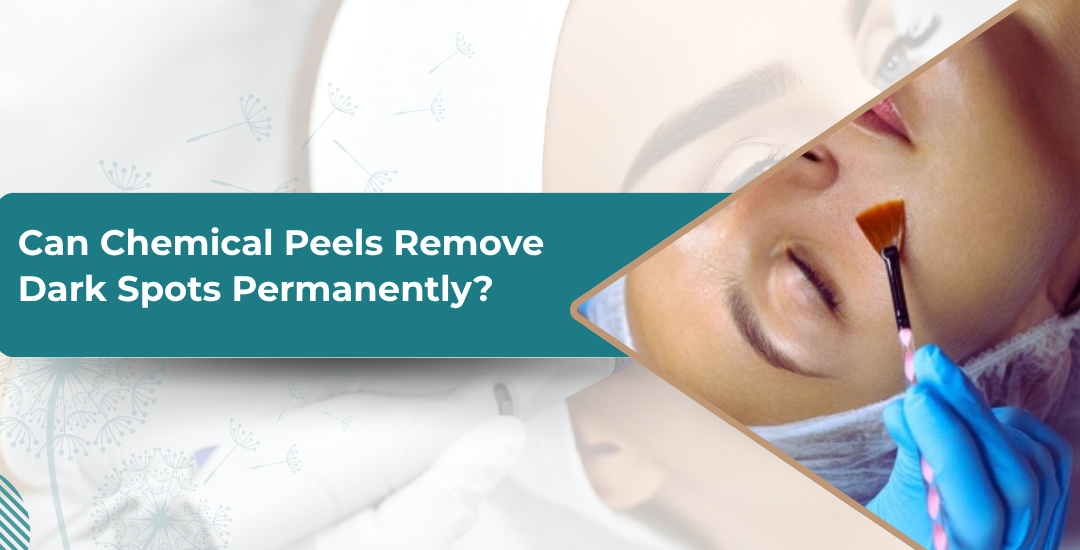
Melanocytes do not always switch off after doing their job. Sun exposure, a bad breakout, hormonal shifts, any of these can push them into overdrive and leave concentrated melanin sitting in the skin long after the trigger is gone. That is what a dark spot is. Chemical peels strip out those pigment-loaded layers and force faster cell renewal underneath. How long that result lasts depends on what caused the spot and what the skin goes through after treatment.
According to Dr. Swetha P, a leading dermatologist in Indiranagar, Bangalore, “Chemical peels can significantly reduce dark spots, but permanence depends on the cause. Sun damage and post-acne marks respond very well. Hormonal pigmentation like melasma needs maintenance alongside treatment. The peel clears what is already there, but stopping new spots from forming is a different part of the plan.”
How Do Chemical Peels Actually Work on Dark Spots?
The acid in a peel breaks the bonds holding onto dead, pigmented cells. Once those shed, fresher skin grows in. The type of acid used has to match how deep the pigment sits because surface peels do not reach mid-dermal spots and strong peels on the wrong skin type cause more damage than they fix.
- It is not the same as exfoliating at home. A clinical peel penetrates in a controlled, regulated way. The skin renewal it triggers runs deeper and faster than anything a scrub or serum achieves on its own.
- Different acids, different depths. Glycolic and lactic acid handle surface-level discolouration from tanning and mild sun damage. TCA goes deeper and is the one used when post-acne marks or sun damage have settled into the mid-dermis.
- The improvement keeps going after the session ends. Cell renewal does not stop when the visible peeling does. Tone keeps improving for three to four weeks following each session as the full cycle completes.
- One session rarely finishes the job. Most patients need three to six sessions, spaced two to four weeks apart. It is a course, not a single treatment that resolves everything at once.
- New sun exposure undoes the result quickly. Peeled skin is more reactive to UV. Skipping SPF after treatment is the most common reason patients come back with the same spots they started with.
Patients with post-acne pigmentation and scarring together can get both assessed in one visit. Acne scar treatment and a peel plan can be combined rather than handled as separate courses.
Which Type of Chemical Peel Works Best for Dark Spots?
Indian skin sits in Fitzpatrick Types III to VI. That matters here because the same aggressive peel that works on lighter skin tones can trigger a flare of post-inflammatory hyperpigmentation on darker ones, making spots worse rather than better. Peel selection is not cosmetic preference. It is clinical.
- Mandelic acid is the safest first peel for darker complexions. It has a larger molecule so it moves slowly into the skin. That means less heat, less inflammation, and a much lower chance of triggering the melanocytes being treated.
- Glycolic acid works on surface-level spots but not on everyone. On lighter skin tones with mild tanning or early sun damage it performs well. On medium to darker skin, overstimulation is a real risk and needs close monitoring throughout.
- Salicylic acid is the right call when acne is involved. It is oil-soluble, which means it gets inside the pore rather than sitting on the skin surface. If the dark spot came from a breakout, this is usually the better starting point.
- TCA when the pigmentation sits deeper. Stubborn age spots, old post-acne marks, moderate sun damage that has not moved with superficial peels. TCA handles these and takes seven to fourteen days to heal.
- Combination peels for patients with mixed concerns. Most patients do not have just one type of discolouration. Blending acids in a single session addresses multiple depths without needing separate treatment rounds.
For a detailed clinical breakdown of which peels work on which pigmentation types in Indian skin, the chemical peel for pigmentation guide covers it fully.
Dealing with dark spots that have not shifted with creams or home remedies?
Why Choose Dr. Swetha P?
Dr. Swetha P is a board-certified dermatologist with an MD in Dermatology, Venereology and Leprosy and over a decade treating pigmentation across all Indian skin tones. Every chemical peel at Dr. Swetha’s Cosmoderm Centre starts with a skin type assessment and pigmentation mapping. No acid is selected before that step is done.
Patients with medium to darker skin tones are treated with the specific caution those complexions require. Post-peel care and follow-up are part of the plan from session one, not added on later.
Frequently asked question.
Can one chemical peel permanently remove dark spots?
One session improves tone visibly but rarely clears pigmentation for good. Three to six sessions with consistent SPF is the standard course.
Are chemical peels safe for Indian skin?
Yes, with the right peel. Aggressive acids on darker skin tones can cause more pigmentation. A proper assessment before treatment is non-negotiable.
How long before results show after a chemical peel?
Surface changes appear within a week. Deeper tone correction keeps improving over three to four weeks as cell renewal completes.
Can chemical peels make dark spots worse?
Yes, if the wrong peel is used or SPF is skipped post-treatment. Post-inflammatory hyperpigmentation is a real risk on darker skin when peel selection is off.
Refrences
- NIH: Hyperpigmentation Therapy — Chemical Peels for Melasma and PIH
- PubMed: Efficacy of Chemical Peeling for Melasma in Dark-Skinned Patients
Disclaimer: This content is for informational purposes only and does not substitute professional medical advice. Consult a qualified dermatologist before undergoing any treatment.