
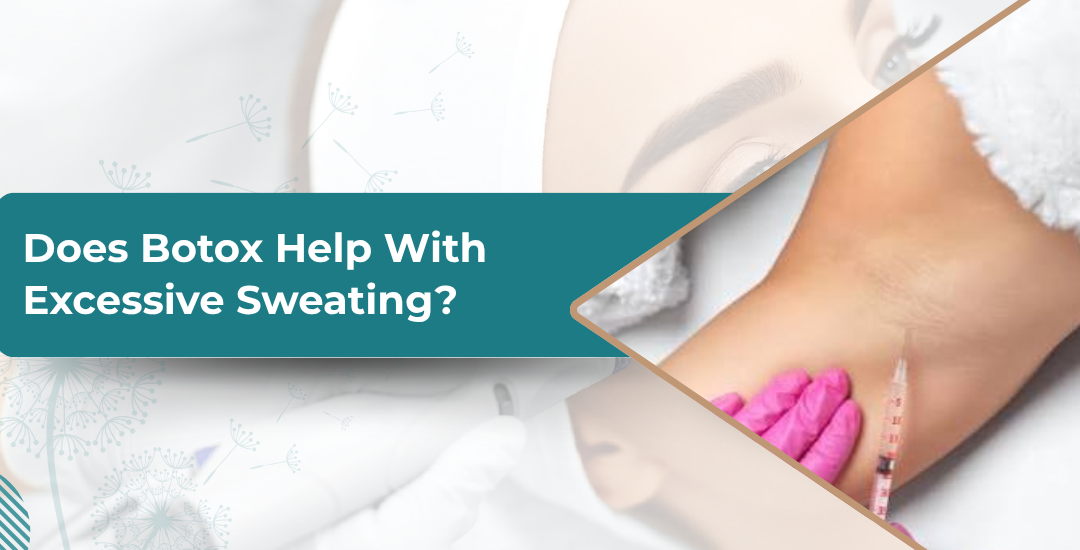
Hyperhidrosis is not about being hot or nervous. It is a condition where sweat glands fire constantly, regardless of temperature or activity. Antiperspirants do not touch it. The only thing that actually works at the nerve level is blocking the signal before it reaches the gland. That is exactly what Botox does, and it has been doing it reliably for over two decades.
According to Dr. Swetha P, a leading specialist in Botox treatment in Indiranagar, “Botox blocks the chemical signal that tells sweat glands to produce sweat. Once that signal is cut off, sweating in that area drops significantly. For most patients, it is the first thing that has actually worked.”
How Does Botox Actually Stop Excessive Sweating?
Sweat glands are activated by a chemical called acetylcholine. Botox gets injected just under the skin and binds to the nerve endings there, stopping acetylcholine from being released. No signal, no sweat. The skin above feels normal, sensation is unchanged, and nothing else in the area is affected.
- It works at the nerve ending, not on the skin surface. Antiperspirants try to block the pore from outside. Botox stops the gland from getting the instruction to sweat at all. Completely different mechanism.
- You notice a difference within 3 to 4 days. It is not instant, but most patients see a clear change in the first week. Full results settle around day 14.
- The session itself is short. Fine needle, multiple small injections across the zone, done in 20 to 30 minutes. No anaesthesia needed for underarms. Normal day resumes immediately after.
- One treatment holds for 6 to 12 months. Underarm results tend to last longer than palms or feet. When it starts wearing off, a repeat session brings it back. Most patients do one to two sessions a year.
- FDA clearance for underarm hyperhidrosis has been in place since 2004. It is not experimental. The clinical data behind it is solid.
If sweating is just one part of a broader skin concern, Botox treatment at Dr. Swetha’s Cosmoderm Centre handles both medical and cosmetic applications in the same sitting.
What Should You Expect Before, During, and After Botox for Sweating?
The process is straightforward, but knowing what each stage actually involves helps avoid the usual first-timer anxiety about results and timing.
- Assessment before anything else. The dermatologist checks the severity, maps the zones, and rules out any secondary cause before recommending Botox. Not every case of heavy sweating needs the same treatment volume.
- Starch-iodine mapping for precise placement. Iodine goes on the skin, starch is dusted over it. Where sweat is active, the area turns dark. This tells the doctor exactly where to inject rather than guessing the grid.
- The injection session runs 15 to 30 minutes. Underarms need no numbing. Palms and soles get topical anaesthetic applied 20 minutes before. After that it is quick, and there is no recovery time attached.
- Keep the area alone for 24 hours post-treatment. No heavy gym session, no pressure or massage on the treated zone. Everything else, including skincare and work, continues as normal.
- Two-week review. Most results are fully visible by then. If there are any gaps in coverage, a small touch-up sorts it before the treatment period is considered complete.
To understand what Botox can do beyond treating excessive sweating, the article on 10 benefits of Botox covers the full medical and cosmetic range in one place.
Struggling with excessive sweating that affects your daily confidence?
Why Choose Dr. Swetha P?
Dr. Swetha P is a board-certified dermatologist with an MD in Dermatology, Venereology and Leprosy, and has been practising medical and aesthetic dermatology for over a decade in Indiranagar. Every Botox session at the clinic is done by Dr. Swetha personally using US FDA-approved formulations. Nothing is delegated.
Hyperhidrosis patients go through a proper zone-mapping assessment before any needle is involved. The aim is accurate coverage with the right amount of product, not a maximum-unit approach. Follow-up is built into the process, and touch-ups happen only when there is a clinical reason for them.
Frequently asked question.
How long does Botox for sweating last?
Results typically last 6 to 12 months depending on the area treated and individual response.
Is the procedure painful?
Minimal. Topical anaesthetic is applied beforehand for sensitive areas like palms and soles.
Can Botox completely stop sweating in the treated area?
Most patients see an 80 to 90 percent reduction. Complete cessation varies but significant improvement is consistent across treatments.
How many sessions are needed?
One session is usually enough. A repeat is recommended when the effect starts wearing off, generally after 6 to 12 months.
Refrences
- PubMed: Evidence for Effectiveness of Botulinum Toxin for Hyperhidrosis
- NIH: Assessing Botulinum Toxin Effectiveness and Quality of Life in Axillary Hyperhidrosis
Disclaimer :This content is for informational purposes only and does not substitute professional medical advice. Consult a qualified dermatologist before undergoing any treatment.