
Both chemical peels and laser peels are safe when matched to the right skin type and condition. Chemical peels use acid solutions to dissolve dead skin layers, while laser peels use controlled light energy to resurface or stimulate collagen. Safety differences come down to depth of penetration, downtime, and how darker skin tones respond. Superficial chemical peels carry lower risk of hyperpigmentation on Indian skin. Fractional laser peels offer more precision but need careful settings to avoid post-inflammatory reactions. Neither is universally safer. The deciding factor is always clinical evaluation.
According to Dr. Swetha P, a leading dermatologist in Indiranagar depend on how precisely the acid strength is matched to the patient’s skin phototype before the first session.
How Do Chemical Peels and Laser Peels Work Differently?
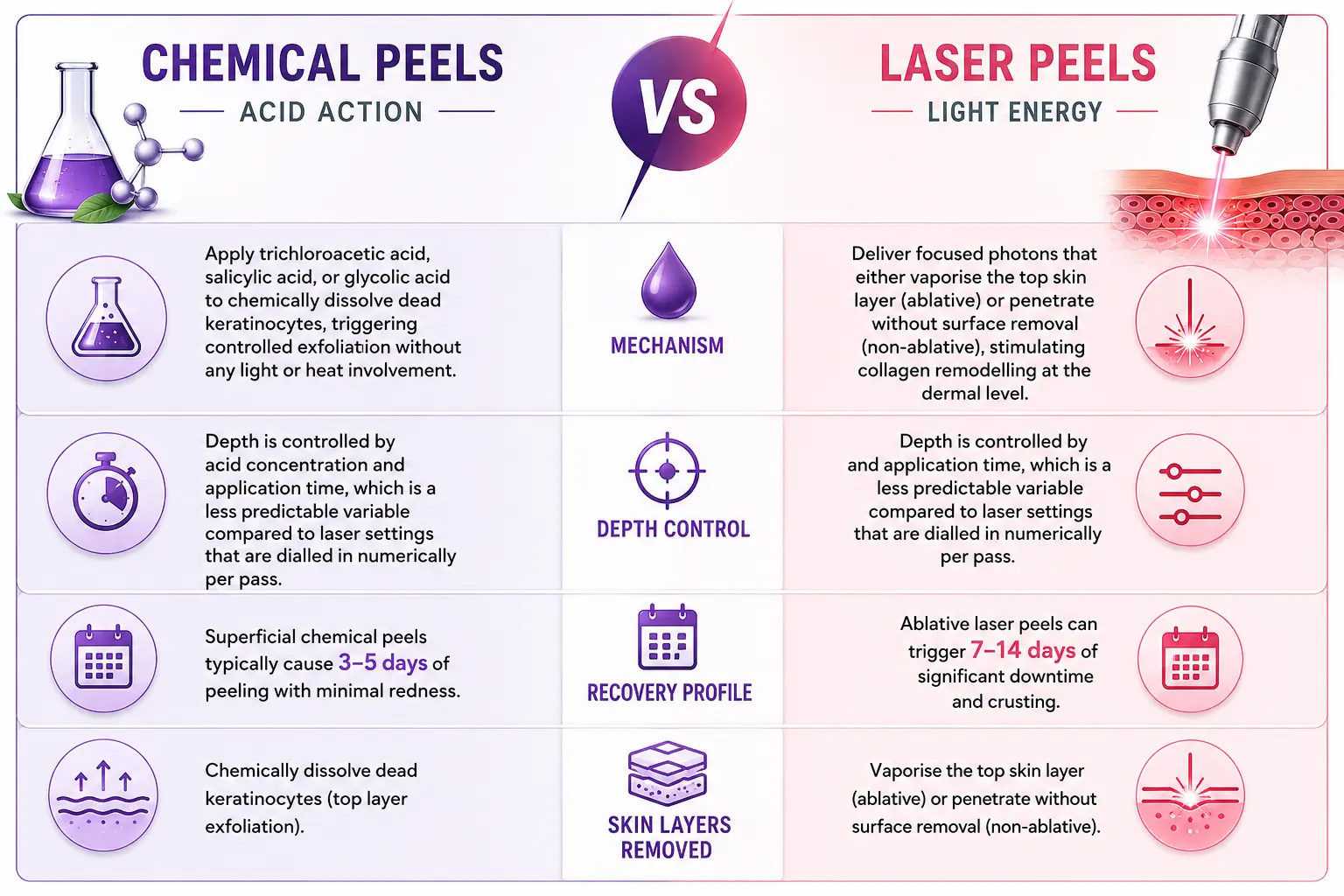
Both methods require pre-treatment skin conditioning and sun protection to reduce the risk of uneven pigmentation after the procedure, which is why a proper consultation before starting any chemical peel treatment matters more than the treatment choice itself.
Which Option Is Safer for Indian Skin Tones?
Indian skin sits in the Fitzpatrick III-V range, making it more reactive to aggressive resurfacing, and the wrong choice can cause lasting pigmentation changes.
- PIH risk: Post-inflammatory hyperpigmentation is a real concern with both treatments, but ablative CO2 lasers on darker skin carry a higher chance of triggering it if settings aren’t adjusted for melanin density.
- Superficial peels first: For most Indian skin concerns like tan, mild pigmentation, and dull texture, a series of superficial chemical peels is the standard first-line approach because tissue response is predictable and manageable.
- Fractional advantage: Fractional non-ablative lasers like the Fraxel-type devices are generally considered safer on darker skin than fully ablative lasers, since they leave micro-zones of untreated tissue that speed recovery.
- Skin prep matters: A 4–6 week pre-treatment regimen with tretinoin or kojic acid is standard before either procedure on darker skin, and skipping this step significantly increases adverse outcome rates.
Choosing between them isn’t about which is safer in the abstract. It’s about which fits your skin’s current condition, and that’s a call best made after reviewing options like laser peels alongside your dermatologist’s clinical read of your skin type.
Concerned about which peel suits your skin tone and texture?
Why Choose Dr. Swetha P?
Dr. Swetha P holds an MBBS and MD in Dermatology, Venereology and Leprosy, with additional laser training from the Middle East, and leads Dr. Swetha’s Cosmoderm Centre in Indiranagar. She specialises in skin resurfacing procedures including chemical peels, laser peels, and microdermabrasion, with specific training in managing these treatments for darker Indian skin tones.
Patients who’ve completed peel treatment at the centre consistently report improved skin texture within 2–3 sessions, with minimal adverse events, because each session is preceded by proper skin analysis and customised pre-treatment care.
Frequently asked question.
Is a chemical peel safer than a laser peel for sensitive skin?
Chemical peels are generally better tolerated on sensitive skin when low-concentration acids are used.
Can I get a chemical peel if I have active acne?
Salicylic acid peels are specifically indicated for active acne and are safe for most skin types.
How many laser peel sessions are needed to see results?
Most patients need 3–5 sessions spaced 4–6 weeks apart for visible skin improvement.
Is there a risk of scarring with laser peels?
Scarring is rare but possible if the laser settings aren’t adjusted for skin type and depth.
Refrences
Disclaimer: This content is for informational purposes only and does not substitute professional medical advice. Consult a qualified dermatologist before undergoing any treatment.