
Pigmentation treatment typically takes 3 to 6 sessions, though the exact number depends on the type, depth, and cause of pigmentation. Superficial post-acne marks or mild sun spots often respond faster, sometimes within 3 sessions. Melasma and dermal pigmentation are deeper conditions that can need 6 or more sessions spread over several weeks. Session intervals usually range from 2 to 4 weeks, allowing skin to recover and respond between treatments. It’s not a one-size number. Pigment depth decides the timeline, and that varies quite a bit from one patient to the next.
According to Dr. Swetha P, an experienced Dermatologist in Indiranagar, Bangalore, “The depth of pigment in the dermis is the single most important factor in deciding how many sessions a patient needs which is exactly why every pigmentation treatment plan at our clinic starts with a thorough skin assessment rather than a fixed session count.”
What Factors Decide the Number of Pigmentation Sessions Needed?
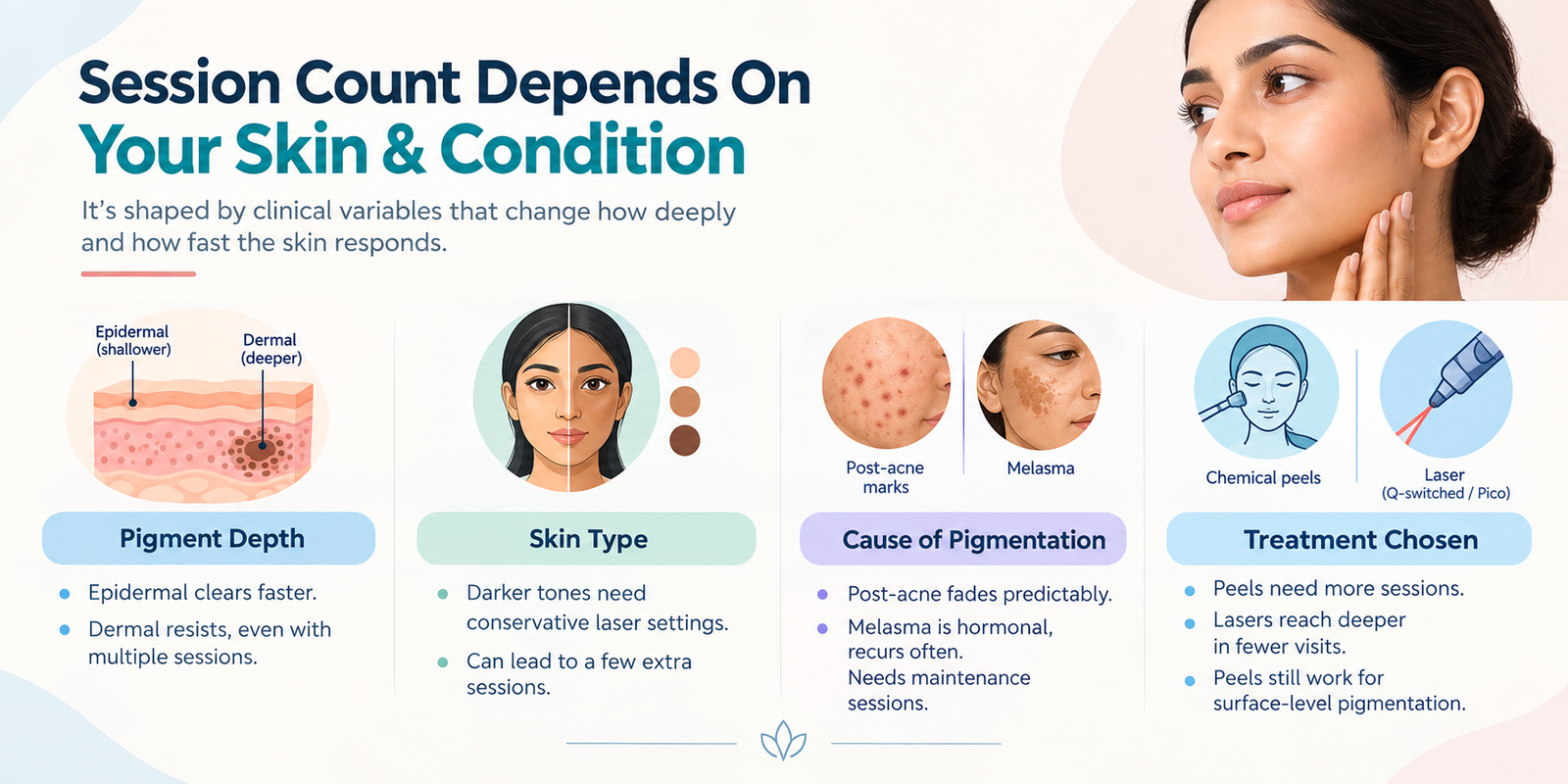
Sun protection between sessions directly affects how quickly skin pigmentation treatment results show. Skipping it can undo the progress from one session before the next one even starts.
What Happens During Each Pigmentation Treatment Session?
Each session builds on the last, and understanding what actually occurs during treatment helps set realistic expectations from the start.
Skin Assessment: The dermatologist examines the pigmentation under dermatoscopy or Wood’s lamp before every session to track response and adjust treatment parameters if the skin isn’t responding as expected.
Treatment Application: Depending on what’s been prescribed, the session involves applying a chemical peel, running a laser over the affected areas, or delivering depigmenting agents through microneedling each method takes between 20 to 45 minutes.
Post-Session Response: Mild redness, flaking, or a darkening of spots in the first few days after a session isn’t a bad sign; it’s actually the treated pigment breaking down and rising to the surface before it sheds.
Topicals Between Sessions: Prescription creams with hydroquinone, kojic acid, or retinoids are typically continued at home between clinic visits because they suppress melanin production and improve what the in-clinic treatment has already started.
Consistent sessions matter more than rushed ones as explored in our blog on chemical peel for pigmentation, missing the recommended interval slows the cumulative effect that makes each visit count.
Noticing stubborn dark patches that aren’t fading with creams alone?
Why Choose Dr. Swetha P?
Dr. Swetha P is an M.B.B.S. and M.D. in Dermatology, Venereology and Leprosy, and a board-certified dermatologist in Indiranagar with specialized training in lasers and anti-ageing treatments from the Middle East. She’s a recognized member of the Indian Association of Dermatology, Venereology and Leprosy, the Cosmetic Dermatology Society of India, and the European Academy of Dermatology and Venereology, and has received international recognition including the Galadari Award at Dubai Derma 2017.
Patients at Dr. Swetha’s Cosmoderm Centre receive customized pigmentation plans built around their skin tone, pigment depth, and treatment history not a generic protocol. Results are tracked session by session, and treatment isn’t extended unnecessarily.
Frequently asked question.
How many sessions does melasma treatment need?
Melasma typically needs 6 or more sessions, as it’s deeper and prone to recurrence.
Can pigmentation be treated in a single session?
Single sessions don’t resolve pigmentation; multiple sessions are always needed.
How far apart should pigmentation sessions be scheduled?
Sessions are usually spaced 2 to 4 weeks apart to allow skin recovery.
Does sun exposure affect pigmentation treatment results?
Yes, unprotected sun exposure between sessions can reverse treatment progress quickly.
Refrences
Disclaimer: This content is for informational purposes only and does not substitute professional medical advice. Consult a qualified dermatologist before undergoing any treatment.