
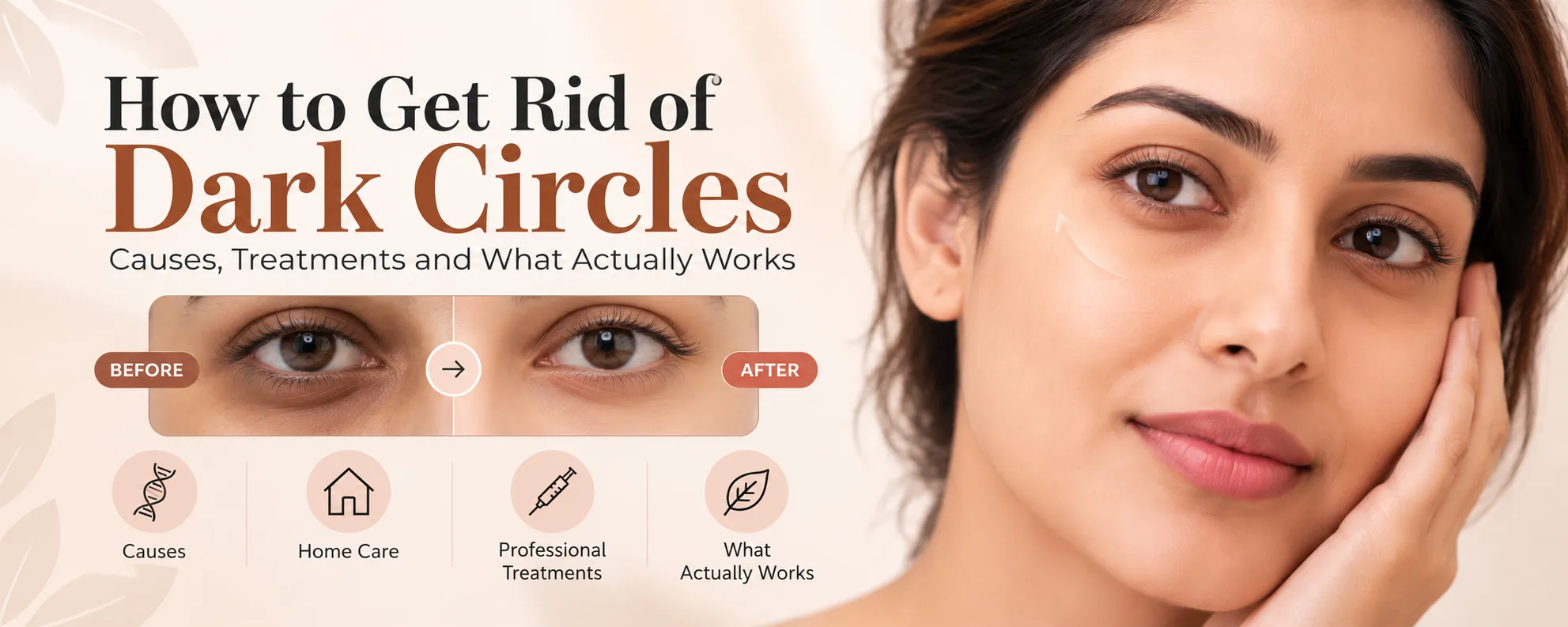
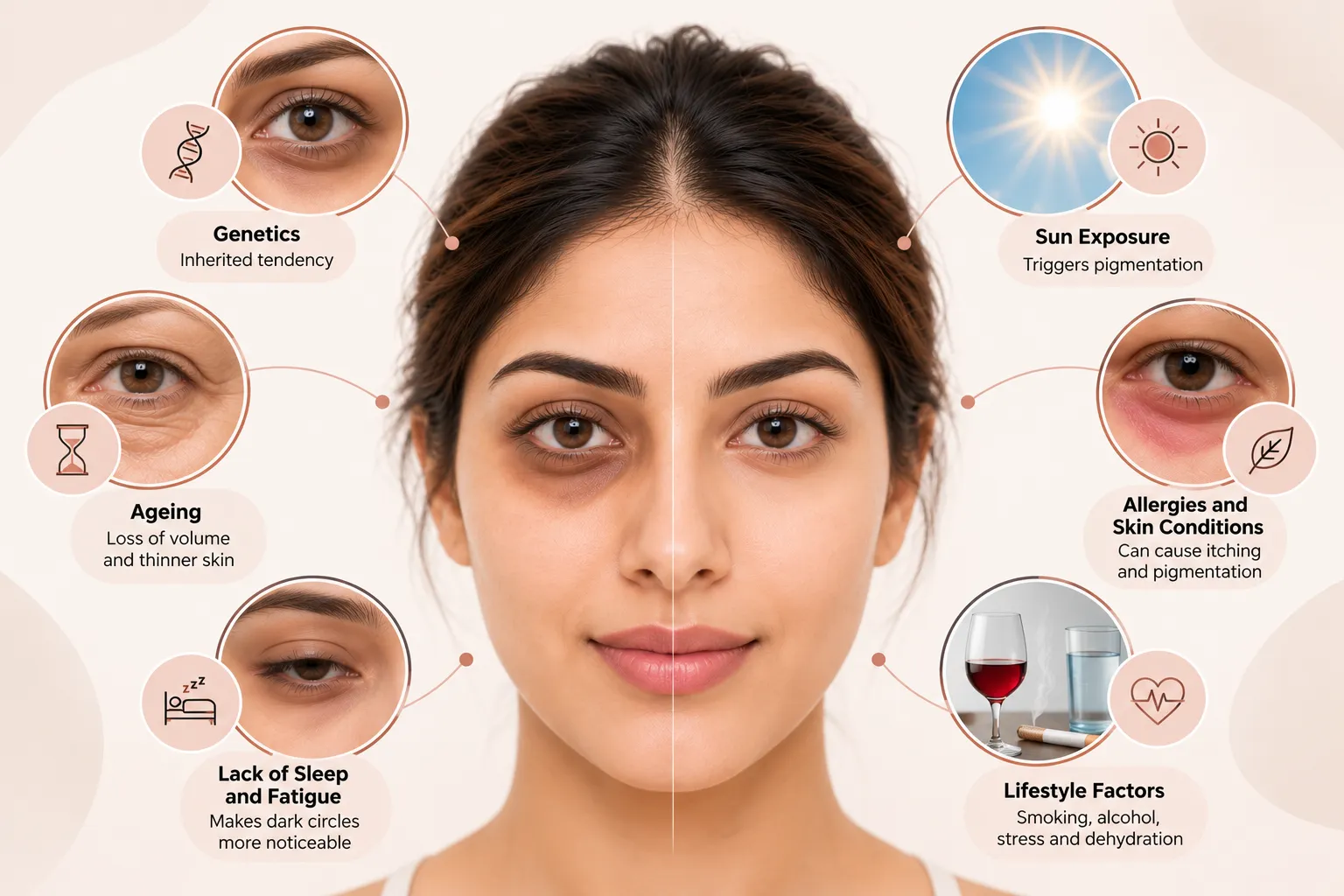
Do dark circles make the face look tired even after a good night’s sleep? If concealers and home remedies are no longer enough, understanding what is actually causing the darkness is the first step towards improving it. There are many causes of dark circles including pigmentation, visible blood vessels, thin under-eye skin, hollowness, puffiness, genetics, allergies and other lifestyle factors. The solution is different from one person to another; hence, it is always best to choose a treatment that will combine skincare, lifestyle changes and professional treatment.
As per Dr. Swetha P., a renowned dermatologist in Indiranagar, Bangalore, “Dark circles may not always be due to lack of sleep. It is important to identify if pigmentation, vascular visibility or structural changes are involved to choose the right treatment.”
As an expert in medical and aesthetic dermatology, Dr. Swetha P. takes the time to understand the concerns of her patients before suggesting any treatment. If you are looking for a dark circle treatment in Indiranagar, it is best to have yourself assessed professionally so as to find out what kind of treatment will suit your skin best.
What Are Dark Circles Under the Eyes?
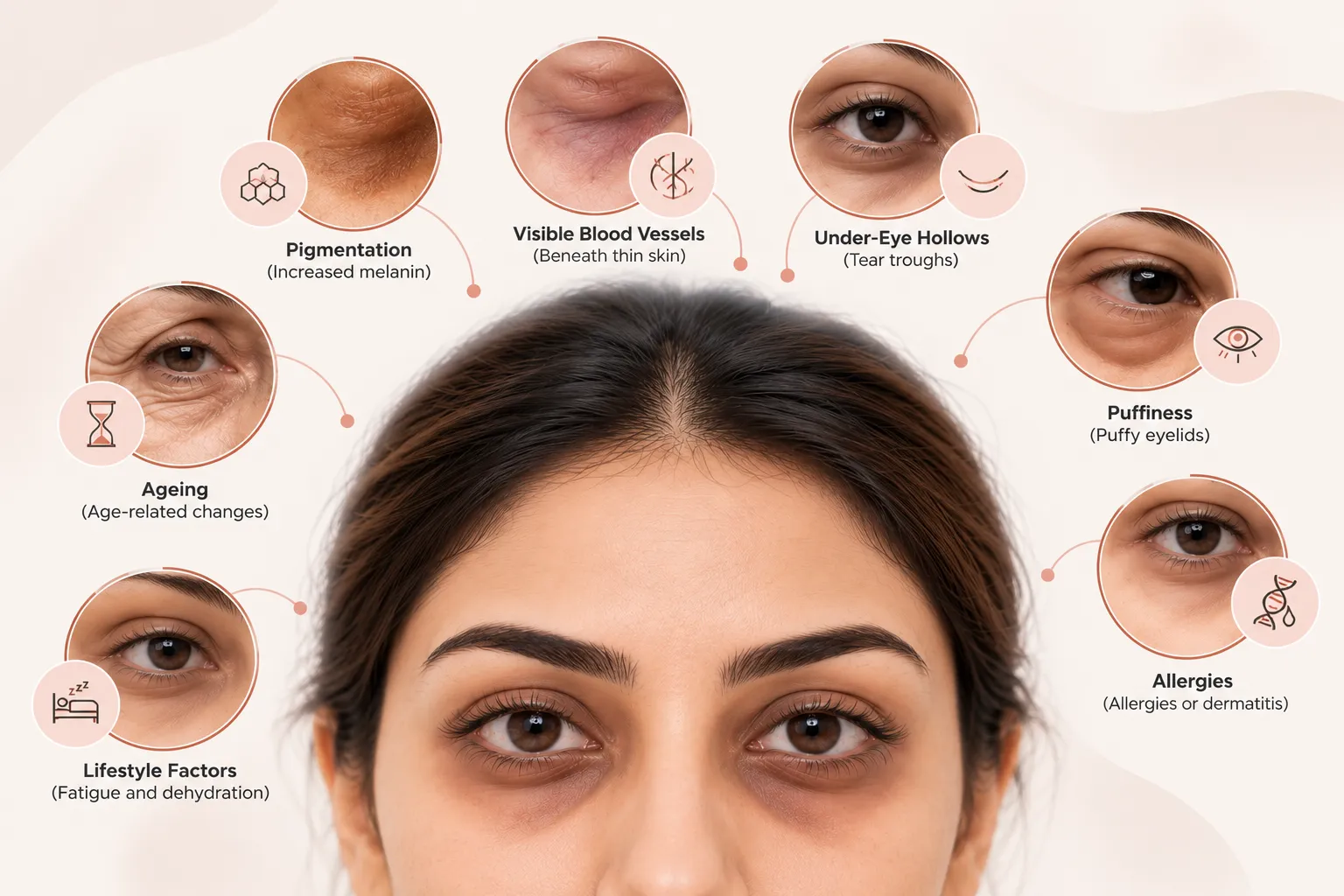
Dark circles refer to a darker or shadowed appearance around the lower eyelids. They are not a single skin condition and can look different depending on your skin tone and the causes of the dark circles. While some get dark patches due to brown pigmentation, others get bluish, purplish, or grey shades as a result of visible blood vessels or skin thinning.
In some instances, the dark area could be a shadow resulting from hollowness or puffiness in the under-eye region. With aging, the skin becomes thinner, and vessels may start to appear through it.
Some of the common contributors include:
Not sure whether your concern is pigmentation or shadowing?
Connect with a skin professional for an accurate assessment.
What Causes Dark Circles Under the Eyes?
How Can You Tell What Type of Dark Circles You Have?
There are some clues you can observe in the mirror but for your assessment to be right, you should seek professional consultation.
* Brown or dark brown: Often associated with increased pigmentation.
* Blue or purple: It can be caused by blood vessel visibility or thinned out skin under eyes.
* Shadow-like darkness: May result from tear-trough hollowness or facial structure.
* Darkness with puffiness: Swelling, allergies, fluid retention, or irritation may contribute.
A dermatologist may examine the skin, ask about family history and lifestyle, and assess whether pigmentation, vascular visibility, or facial structure is contributing to the appearance.
How to Get Rid of Dark Circles at Home
Home care can be useful when dark circles are mild or linked to lifestyle and environmental factors. However, it is important to have realistic expectations because home remedies cannot correct structural hollows or deeper pigmentation on their own.
Consider these habits:
- Use sunscreen daily: Sun protection helps prevent pigmentation from becoming darker.
- Get adequate sleep: A consistent sleep routine may reduce the tired appearance associated with existing circles.
- Stay hydrated: Adequate fluid intake supports overall skin health.
- Avoid rubbing the eyes: Frequent rubbing can worsen irritation and pigmentation.
- Use a gentle eye-area routine: Avoid harsh exfoliants or irritating products around this sensitive area.
- Apply a cool compress: Cooling may temporarily reduce puffiness and make visible vessels less prominent.
- Manage allergies: Treating an underlying allergy can reduce itching and repeated rubbing.
- Maintain a balanced diet: Adequate nutrition supports healthy skin.
Evidence for many popular DIY remedies is limited, so ingredients such as lemon juice or other acidic substances should not be applied around the delicate eye area without professional advice.
What Are the Best Treatments for Dark Circles?
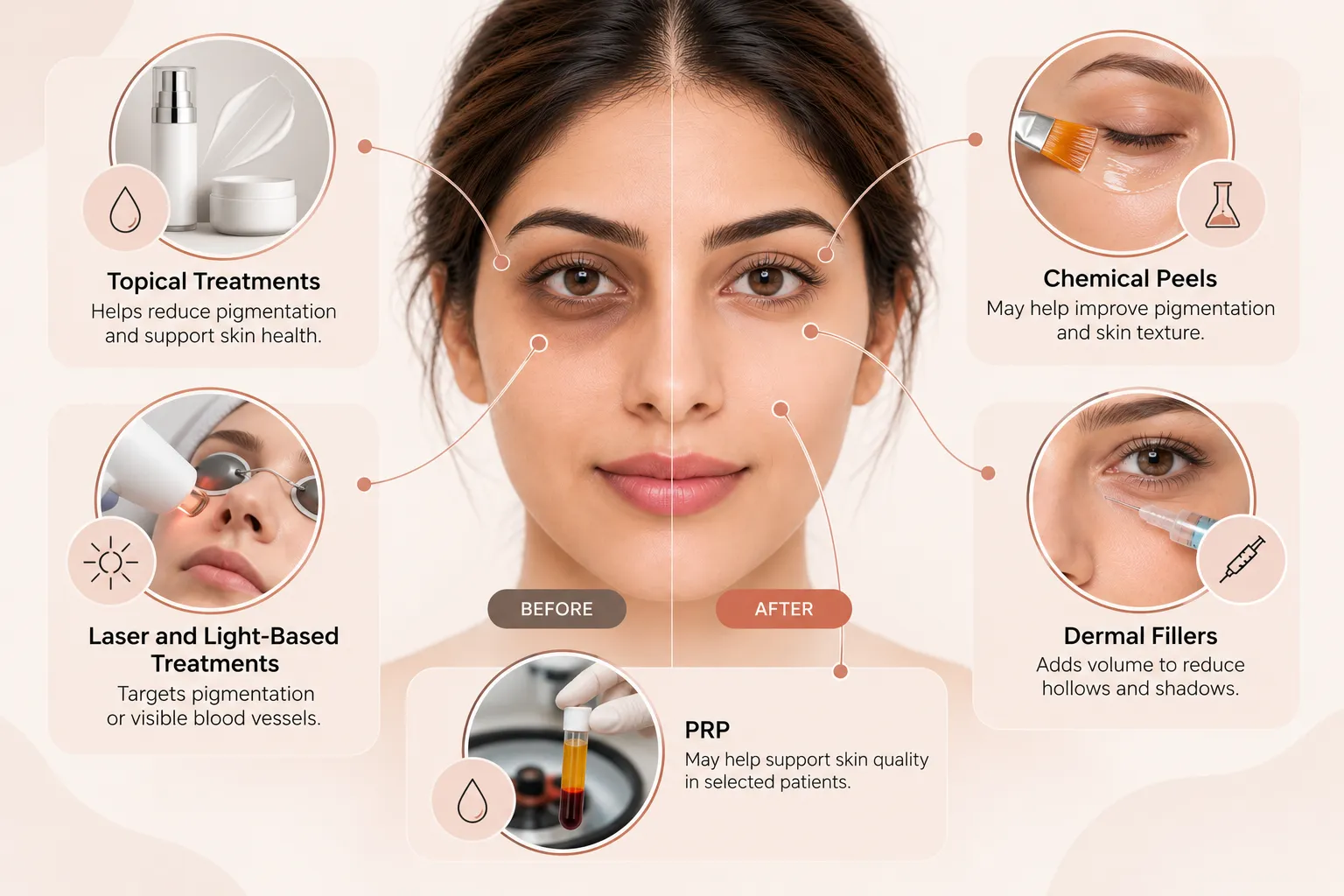
Which Dark Circle Treatment Works Best for Different Causes?
| Main Cause | Possible Treatment Approach |
| Pigmentation | Sun protection, topical treatments, selected peels or laser-based procedures |
| Visible blood vessels | Selected laser or light-based treatments |
| Thin skin | Skin-quality treatments such as PRP may be considered |
| Under-eye hollowness | Dermal fillers or other volume-restoring approaches |
| Puffiness | Addressing allergies, sleep, lifestyle factors, or underlying causes |
| Mixed causes | A combination approach may be recommended |
How Long Does It Take to See Results from Dark Circle Treatment?
The time it will take for the results depends on both the cause and method used for dark circle treatment.
For example, dark circle treatment involving lightening pigmentation takes more time than procedures that address volume/structural shadowing issues, as results can be seen instantly; however, the final result depends on healing and individual response.
Different factors affect results such as age, skin type, severity of pigmentation, aftercare, living style, etc.
It should also be noted that there may be the need for ongoing maintenance of the result achieved due to genetic nature, ageing process and prolonged exposure to sun rays.
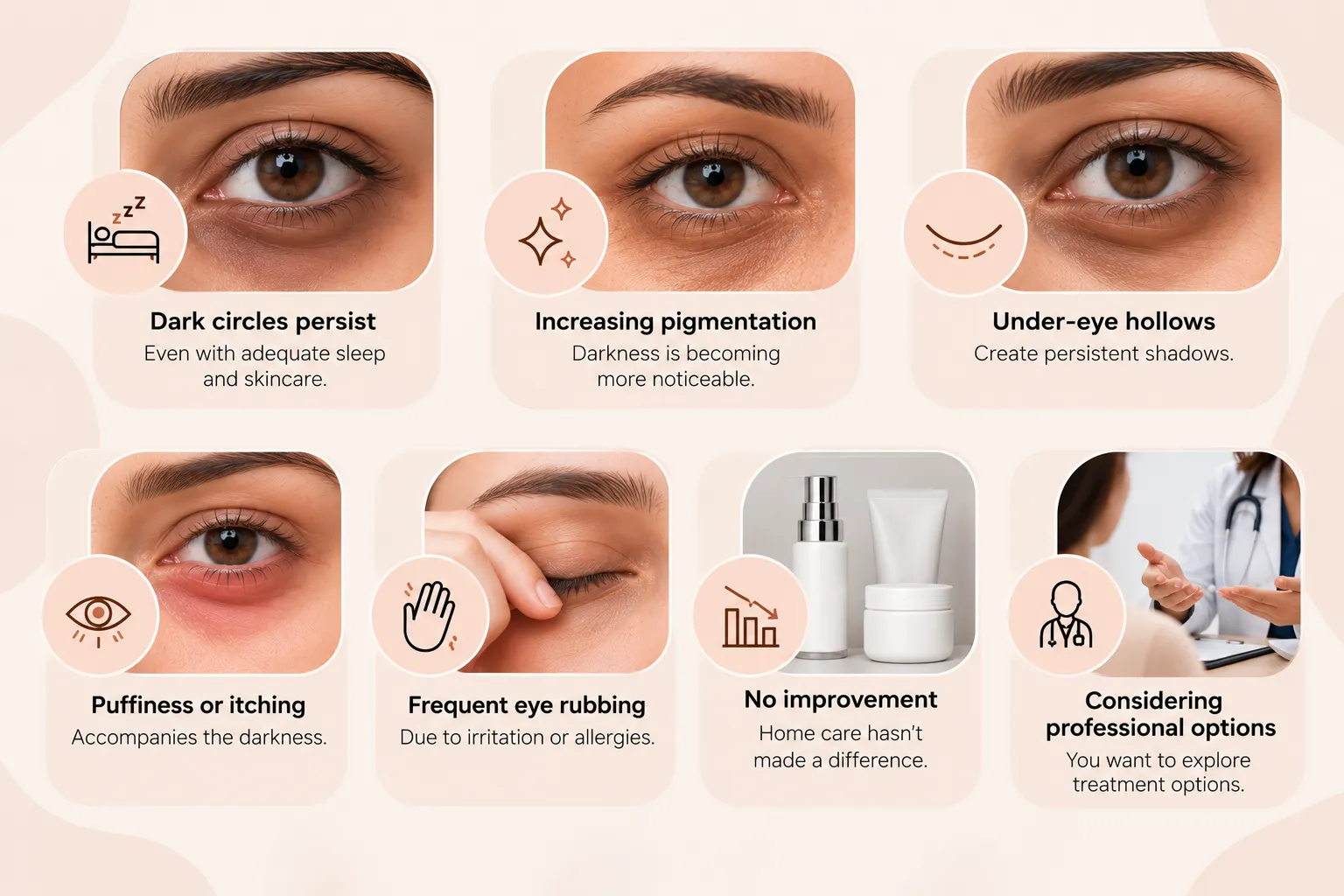
When Should You See a Dermatologist for Dark Circles?
Consider consulting a dermatologist when:
Frequently asked question.
1. How to get rid of dark circles permanently?
2. Can dark circles go away naturally?
3. Can drinking more water reduce dark circles?
4. What is the best treatment for dark circles?
5. Can dark circles be treated with laser?
References:
https://www.mayoclinic.org/symptoms/dark-circles-under-eyes/basics/causes/sym-20050624
https://pmc.ncbi.nlm.nih.gov/articles/PMC7992473/
Disclaimer: The information shared in this content is for educational purposes and not for promotional use.